How much histamine is actually in that food?
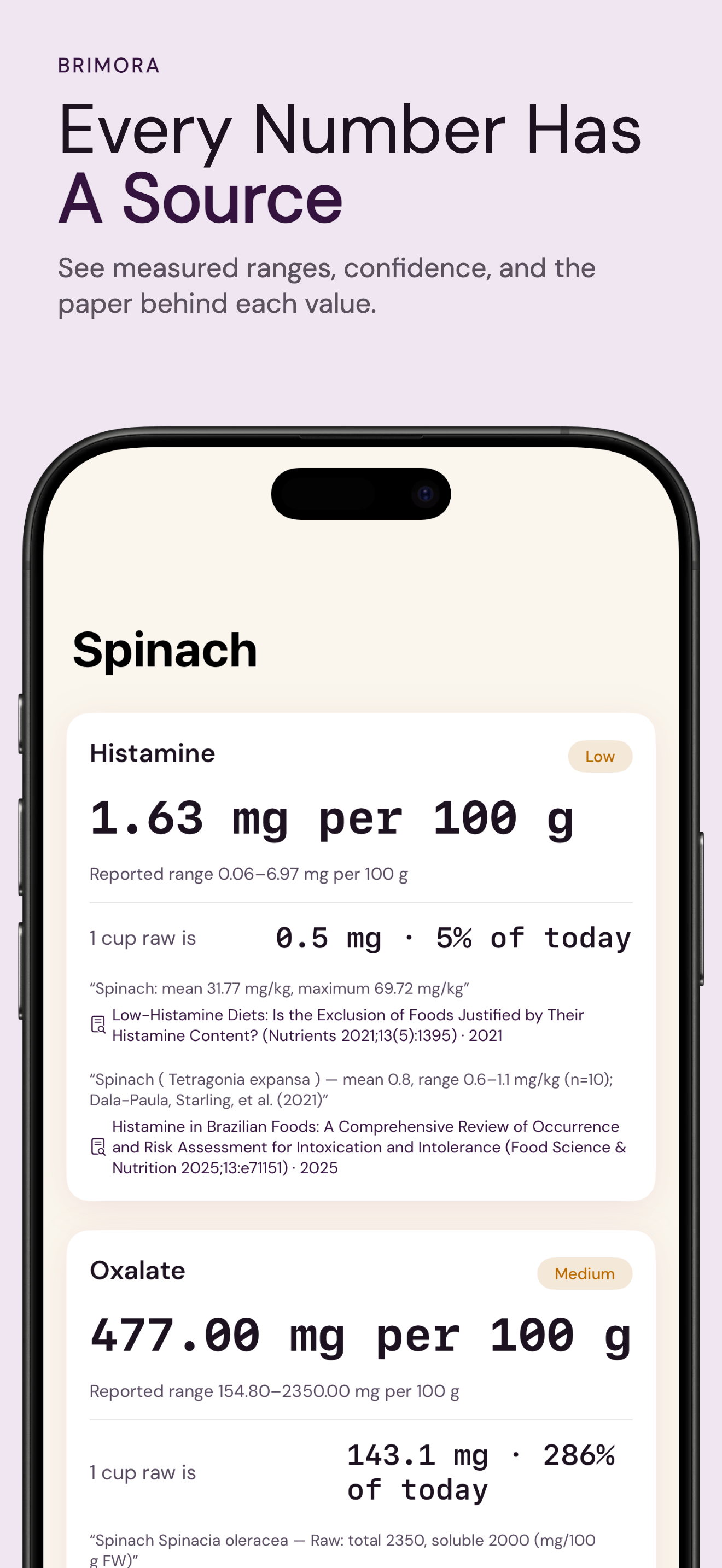
Published low-histamine lists disagree with each other, and most of them show a colour instead of a number. Brimora shows the measured value, the range different sources report, and a link to the study it came from.
Common lookups
- Abroteanot detected (under 0.10 mg/100 g)
- Açainot detected (under 0.10 mg/100 g)
- Acerolanot detected (under 0.10 mg/100 g)
- Aged cheese3.31 mg/100 g
- Almeirão roxonot detected (under 0.10 mg/100 g)
- Almondsnot detected (under 0.10 mg/100 g)
- Anchovynot detected (under 0.10 mg/100 g)
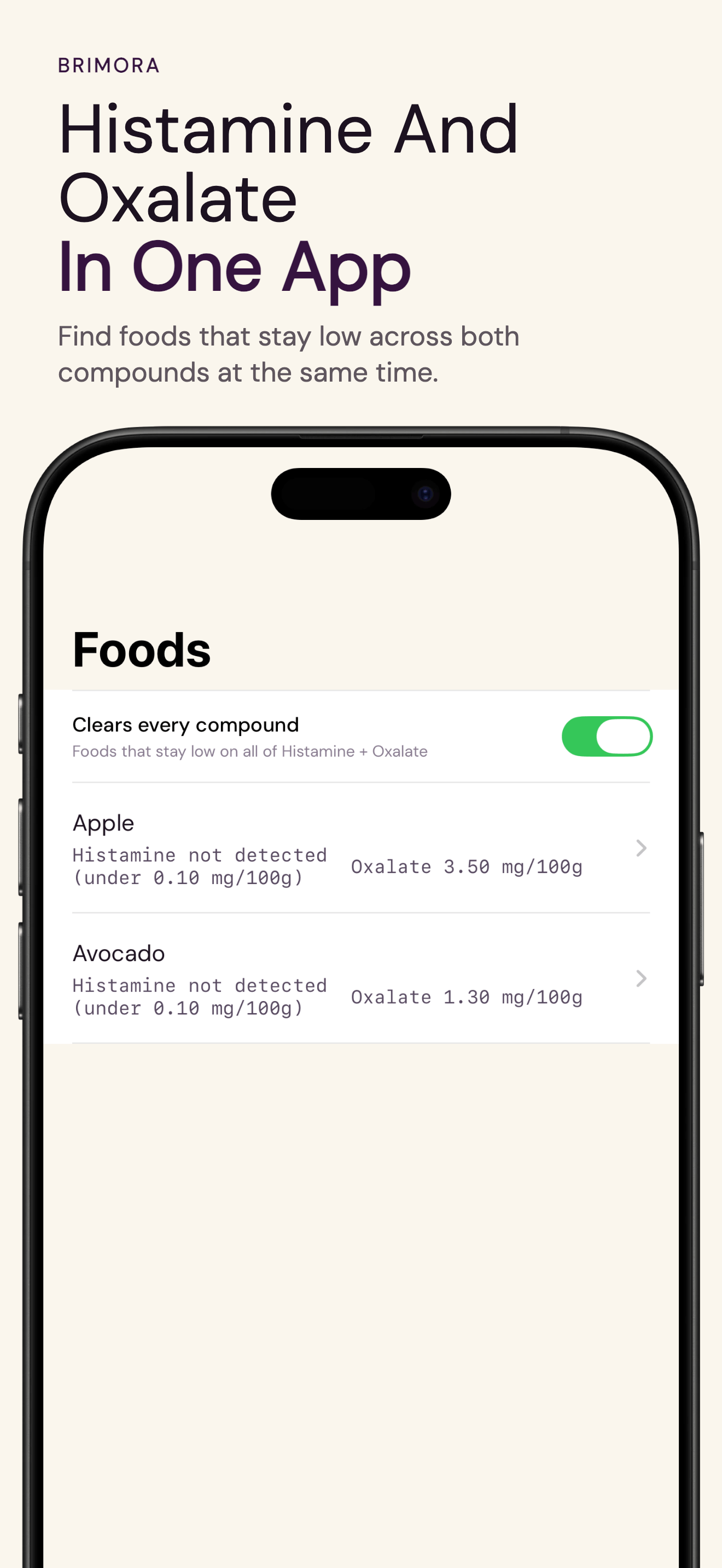
- Applenot detected (under 0.10 mg/100 g)
Where the numbers come from
- Low-Histamine Diets: Is the Exclusion of Foods Justified by Their Histamine Content? (Nutrients 2021;13(5):1395) · CC BY 4.0
- Histamine in Brazilian Foods: A Comprehensive Review of Occurrence and Risk Assessment for Intoxication and Intolerance (Food Science & Nutrition 2025;13:e71151) · CC BY 4.0
- Oxalate in Foods: Extraction Conditions, Analytical Methods, Occurrence, and Health Implications (Foods 2023;12(17):3201) · CC BY 4.0
Data updated 2026-08-19. Values are food composition figures, not medical advice — tolerance differs from person to person.
The evidence-first food log
Keep the number.
Keep the source.
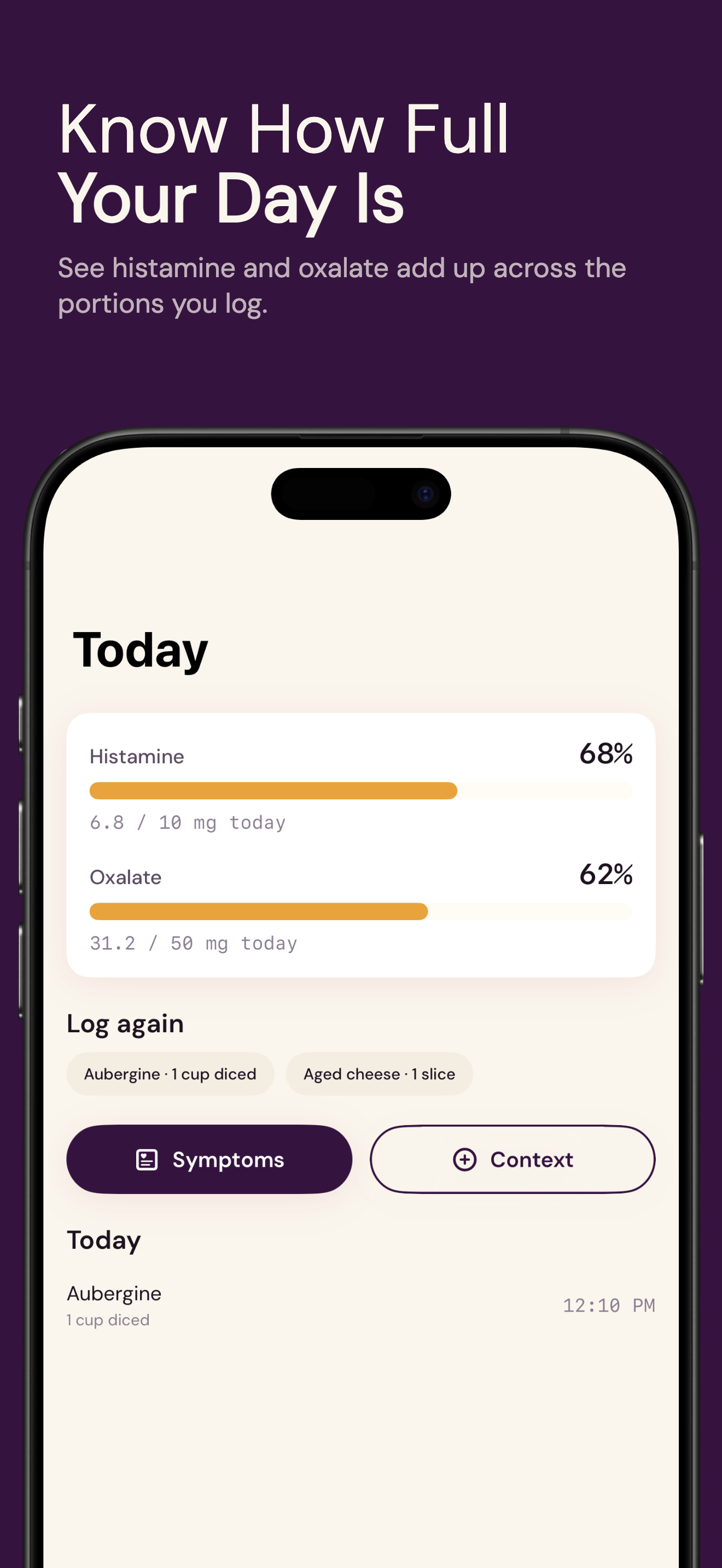
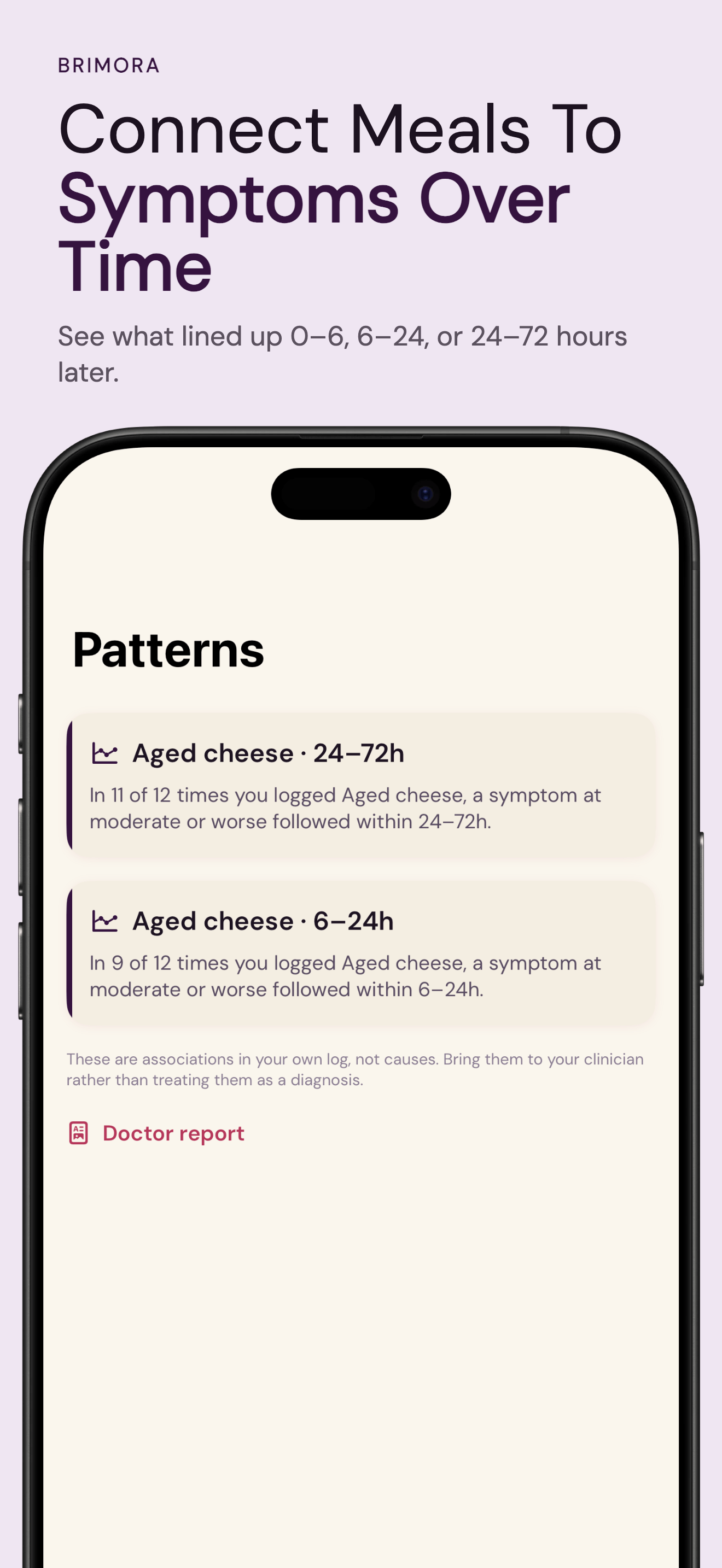
Brimora brings histamine and oxalate into one quiet daily view, then keeps every measurement tied to the paper it came from. Log portions, notice patterns, and keep your own experience separate from generic “safe food” lists.
 Coming soon on theApp Store